
I sat with my hands extended before me holding the driver’s wheel of the rental car I was currently powering up the motorway to the Lake District to collect my husband from a two-day retreat. The occasional utterances could be heard from behind me as my eldest son played Minecraft, and my youngest gave in to the drive-induced slumber which is so hard to resist. I was listening to that day’s latest news reports, the grim details and commentary coming out of Iran and Lebanon juxtaposed against the backdrop of blue skies, calm and green countryside we were whizzing through. “God, this is not okay.” I found myself saying out loud as a wave of grief crashed into my heart.
The daily increase of the suffering of humanity was filling my consciousness, and with it that feeling of helplessness which often accompanies the overwhelming realities outside of our control.
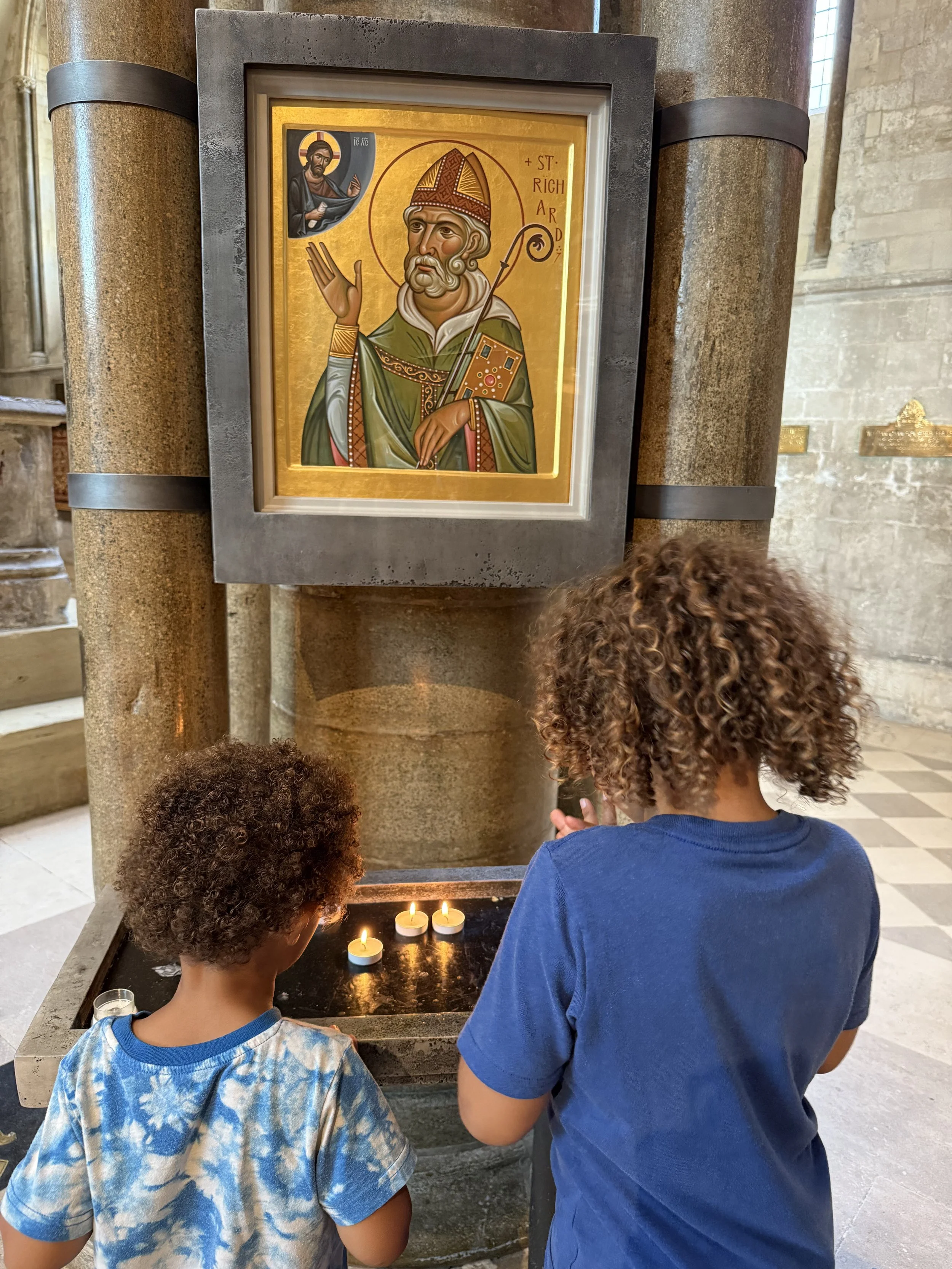
The thought, "I need to pray,” was my next internal response, and soon I had switched from my news podcasts to a compilation of songs recorded from a prayer room.
“God, I don’t talk to you like I used to.” These were the words that next spilled out of my mouth as my eyes remained fixed on the stretch of road in front of me, and my fingers readjusted their grip on the wheel. The song playing through the speakers sent me back to 2010, to being 22, hungry for God encounters that would have me traveling around the world, naive to the ways in which people with big church platforms could be guilty of doing as much harm as good if given enough temptation and opportunity. I remembered losing my voice after one such trip due to singing my heart out in worship all week at a conference. The feeling of being alive, connected to the Maker of the Universe, so sure of what the answers to the world’s problems were, utterly convinced that enough prayers spoken with enough conviction would change the course of history. It’s a very powerful way to think and feel. It can leave you with a confidence which makes you feel invincible. Arrogant, maybe, in your beliefs.
Now, don’t get me wrong. I still believe in the power of prayer. I have witnessed enough wild answers to prayers prayed to turn my back on such an essential part of faith and life. I have, however, encountered a culture within Christianity which has disconnected itself from the humanity of the whole world, and has created something insular, where prayer is politicised and weaponised against people that are believed to be too different, or in the way of, a certain theological or eschatological viewpoint.
As I began ruminating on this mixture of memories, experiences and responses, I realised just how much the way that I relate to God had been affected by everyone but Him. Actually, this wasn’t the first time I had come to this sense of awareness, but in this moment a new phrase rang through me:
“It’s not God’s fault.”
Often the result of being hurt by Christians or the church, for many people, is to abandon the Church, cancel Christians and also turn away from God. The train of thought can go something like this:
‘I trusted this group of people who were meant to be followers of God, but instead they really hurt me, deceived me or rejected me. God, where were you? Why didn’t you protect me? I don’t think I can follow a God who allows so much suffering; who would allow all of these things to happen to me; who would allow these people to have such power over others but are actually causing so much damage. In fact, I’m not sure that God is real after all… These things that I experienced were just a result of manipulation; I was manipulated… If there is a God, I don’t trust him… I don’t want anything to do with Christianity anymore. It causes more harm than good.’
I haven’t walked away from God, but the way I pray has changed. Naivety no longer protects me from seeing the underbelly of how church organisations can operate, or how politics have poisoned the way leaders minister, teach or interpret the Bible. I have allowed the actions and fruit of men and women to impact how I talk to God, and how willing I am to trust him with my daily bread.
It’s not God’s fault that ‘so-and-so’ broke my trust. It’s not God’s fault that that organisation had a broken system. It’s not God’s fault that that leader was given a platform he should never have had. It’s not God’s fault that that church held to a theology which caused me harm. It’s not God’s fault that those people misused the funds which they were entrusted with. It’s not God’s fault that certain people have used the prophetic for their own gain and benefit, instead of truly bringing encouragement to others that then draws them closer to God. It’s not God’s fault that so many people have gotten it wrong, and sought empire over relationships, or power over intimacy. It’s not God’s fault that the way in which I pray has changed.
This realisation isn’t sending me into a spiral of regret at what has changed or been lost over these years. I am grateful for what I have learnt through the pain and disappointment. My faith is now a lot less dependent on others than it was in earlier years. It has been tried, tested, and remains. Now when I pray, I do so in the confidence of the goodness of God despite what my eyes can see. I seek the miracle and also trust that he will never leave me or forsake me, even if I don’t receive the answer I was searching for. Now, I don’t require hype and energy to know that God is with me, in fact it is often in the quiet and stillness that I feel him most near. I am confident that my circumstances do not dictate God’s faithfulness, but even when I am in lack He will provide what I truly need.
The way I pray has changed, and I hope that it continues to do so as I continue to remind myself that, “it’s not God’s fault.”